Commercial Elevator Dimensions: Standard Sizes & Standards
By Admin | 27 Jul, 2026
Choosing the correct commercial elevator size is a critical decision during building design and planning. The right dimensions ensure smooth traffic flow, ADA compliance, and proper emergency access, while avoiding costly shaft redesigns. When it comes to selecting an elevator for commercial buildings, choosing the right size is crucial. Whether you're installing an elevator in a high-rise office building, a shopping mall, or a multi-story retail complex, the elevator dimensions will play a significant role in ensuring that your building’s vertical transportation needs are met efficiently and safely. The right size ensures optimal space utilization, passenger comfort, and compliance with building codes and regulations.
In this blog, we will explore the importance of choosing the correct commercial elevator size, the factors to consider, and how to determine the right dimensions for your building’s specific needs.
Understanding Commercial Elevator Sizes
Commercial elevators come in various sizes to accommodate different types of buildings and user needs. Generally, the standard size of a commercial elevator ranges from 2,500 to 5,000 pounds of capacity, but the dimensions can vary based on factors such as building type, expected foot traffic, and load requirements.
Standard Commercial Elevator Dimensions Overview
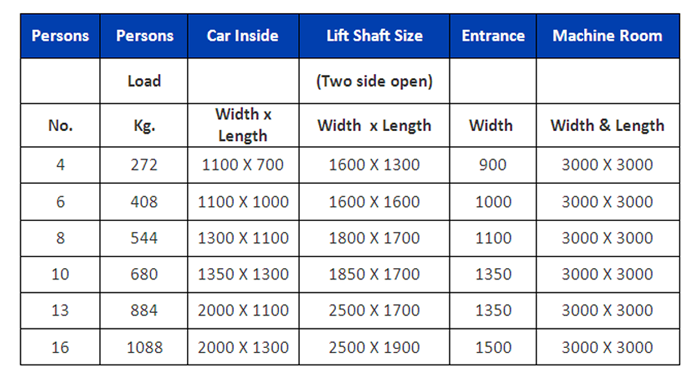
Commercial elevators generally fall into three common weight/capacity categories. Here are typical cab and hoistway (shaft) dimensions:
| Capacity | Passenger Count | Typical Cab Size (W × D) | Standard Door Width | |
| 2,500 lbs | 10–12 passengers | 6' 8" × 4' 3" (203 cm × 130 cm) | 36 in (91 cm) | |
| 3,500 lbs | 15–18 passengers | 6' 8" × 5' 5" (203 cm × 165 cm) | 36 in or 42 in | |
| 4,000–5,000 lbs | 20+ / Stretcher Lifts | 7' 8" × 5' 5"+ (234 cm × 165 cm) | 42 in or 48 in |
Factors Affecting Commercial Elevator Size
There are several factors to consider when choosing the right elevator size for your commercial building. Understanding these variables will help ensure that the elevator system is functional, safe, and compliant with regulations.
1. Building Height and Number of Floors
The height of the building and the number of floors to be served will determine the type of elevator system required. For a multi-story building with many floors, you'll need an elevator that can handle larger loads and more passengers in a short amount of time.
- High-rise buildings: Larger, high-capacity elevators are usually needed for high-rise buildings. They tend to have larger cabins to accommodate more passengers and reduce wait times.
- Mid-rise buildings: For buildings with fewer stories, elevators with smaller cabins and lower capacities may suffice, depending on the traffic.
2. Expected Passenger Traffic
The volume of passengers using the elevator daily will influence the size you choose. High-traffic buildings, such as office towers, shopping malls, and hotels, will require elevators with larger cabins that can transport more people at once.
- Low to moderate traffic: Smaller elevators with a capacity of 2,500 to 3,500 pounds may suffice for buildings with fewer occupants and moderate use.
- High traffic: If the building sees a lot of foot traffic, you may need larger elevators (5,000 pounds or more) with faster speeds to ensure efficient movement of people and reduce waiting times.
3. Accessibility Requirements
Buildings that must comply with ADA (Americans with Disabilities Act) or similar accessibility standards require elevators that accommodate wheelchair users and individuals with mobility challenges.
- Wider doors: Elevators in commercial buildings must be wide enough for wheelchair access, typically 42 inches or more for the doors.
- Cabin size: The cabin must be spacious enough to accommodate a wheelchair and its user, with extra room for a caregiver or companion if necessary. A minimum cabin size of 5' x 7' is often recommended for such applications.
4. Usage Type (Passenger or Freight)
Depending on the intended use of the elevator, you’ll need to select a specific type. Passenger elevators are designed for human transport, while freight elevators are used for transporting goods and equipment.
- Passenger elevators: For regular human traffic, the elevator’s size will depend on how many passengers are expected to use the elevator simultaneously. This can be calculated based on expected peak hours or by assessing the building’s floor area.
- Freight elevators: These elevators are designed to carry heavy loads such as equipment, furniture, or pallets of goods. Freight elevators usually have larger doors and more robust construction to accommodate bulky items and their movement within the building.
5. Floor Space and Shaft Space
Before determining the final elevator size, it’s essential to consider the space available in the building for installation, both in terms of floor area and shaft space.
- Shaft size: The elevator shaft must be large enough to fit the chosen elevator's dimensions, including sufficient space for operation and safety features.
- Cabin space: For passenger elevators, the cabin dimensions must be optimized to comfortably fit passengers while not wasting valuable space.
6. Building Code and Safety Regulations
Local building codes and elevator safety standards play a major role in determining the minimum and maximum size for an elevator. These codes ensure that the elevator is safe to use and operates according to specific requirements for public buildings.
- Elevator capacity: Codes will typically specify the minimum load capacity required based on the building type, expected foot traffic, and number of floors.
- Height restrictions: Some regions have height restrictions on elevator shafts, which may limit the type of elevator you can install.
7. Technology Integration
Advances in elevator technology also influence the size and design of commercial elevators. Smart elevators with destination dispatch systems can improve efficiency and reduce wait times, and these systems often require more advanced designs and configurations.
- Destination dispatch: The system uses algorithms to predict and optimize passenger flow, which may result in smaller, more compact cabins with greater efficiency.
- Eco-friendly options: Some modern elevators offer energy-saving features such as regenerative drives and LED lighting, which may impact the elevator's design.
Choosing the Right Elevator Size for Your Building
When selecting the right elevator size, the process starts by assessing the building’s specific needs. These are some key steps to follow:
1. Assess Passenger and Traffic Flow Needs
- Calculate the expected number of passengers per hour, peak usage times, and average wait times.
- Consider the specific needs of the building, such as additional services (freight or accessibility).
2. Choose the Elevator Type
- Based on the building's function (office, residential, hotel, etc.), choose a passenger or freight elevator with the appropriate load capacity and cabin size.
3. Consult with a Professional Elevator Company
- Work with a reputable elevator provider who can help determine the appropriate size based on your needs, building design, and local regulations.
Choosing the right commercial elevator size is essential for ensuring safe, efficient, and comfortable vertical transportation in a building. By considering factors such as traffic volume, accessibility, and building codes, you can select the best elevator size to meet your needs. Always consult with an experienced elevator company to ensure that the elevator's design aligns with the building’s functionality and compliance requirements. Properly sized elevators not only enhance the user experience but also maximize the efficiency of your building’s transportation systems, making them a vital part of modern commercial infrastructure. At HAYASHIMU we specialize in providing high-quality commercial elevator that are designed to enhance the accessibility, safety, and efficiency of your building.